
.. featuring 9 ensembles dated 1740 to 1909 and… the Buffalo Gals!
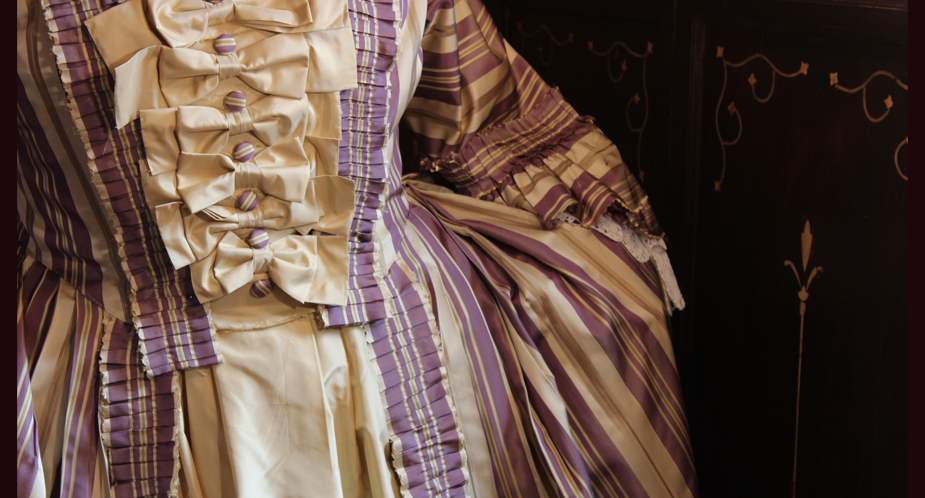
.. featuring 9 ensembles dated 1740 to 1909 and… the Buffalo Gals!
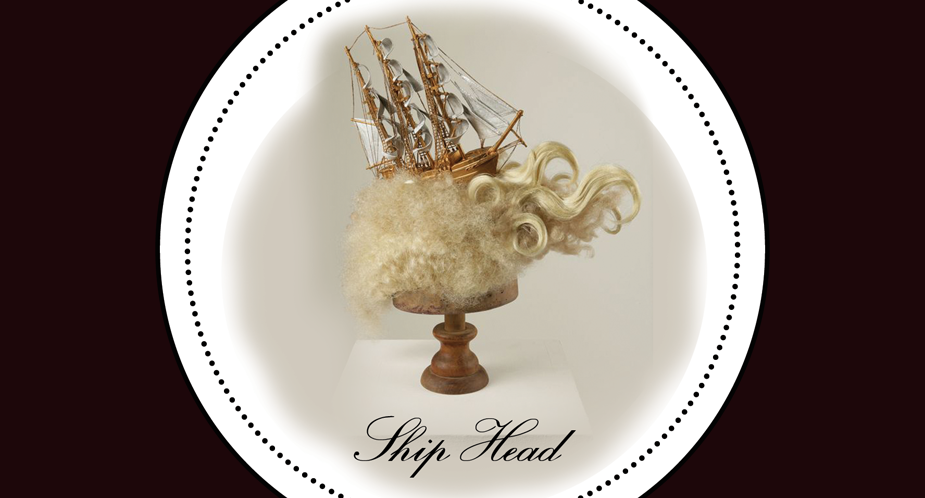
You won’t see a ship on a head, but you will see a bird’s nest, along with several beautiful millinery masterpieces and 9 custom built historic ensembles. Send a message if you’d like an invitation: March 3rd in Cody, Wyoming. (photo: Marie Antoinette’s actual wig and “hat” from the late …
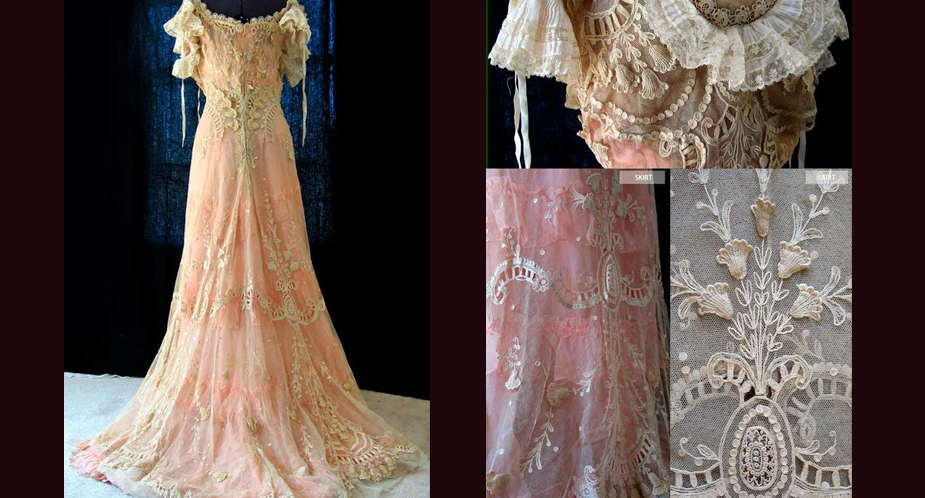
.. laces, fabrics, and trims used by high status, working, and lower class fashion across the country at affordable prices with reasonable access. (photo: 1900 (ish) Parisian ball gown made with mass produced materials)
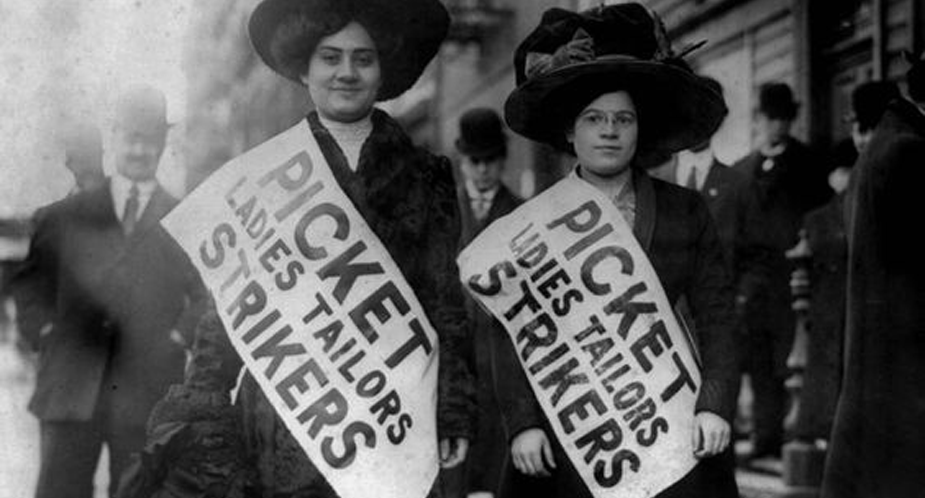
.. went on strike for better working conditions. Over 60,000 (we note, “well cloaked”) cloakmakers walked off the job. Garment unions were among the first created.

… some are now luxury apartment buildings in repurposed parts of cities like this one in Richmond, Virginia.
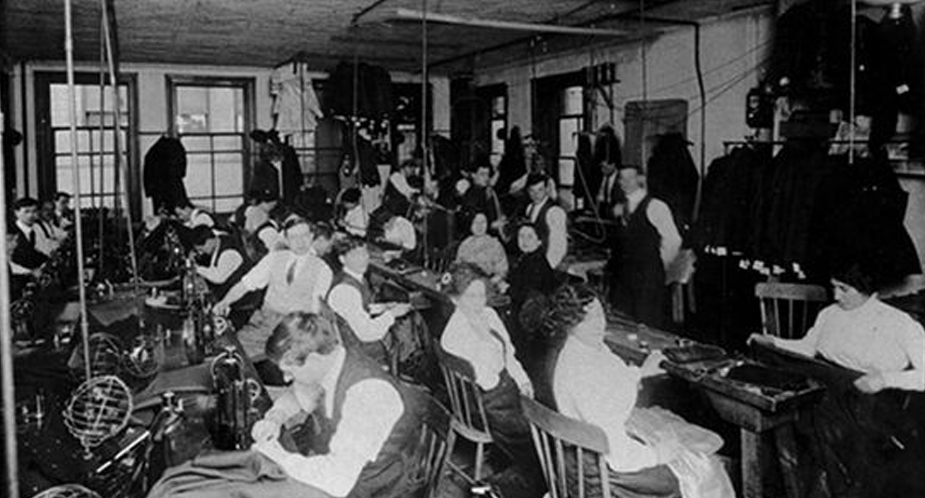
.. burned down with the workers inside, making the public aware of the dangers of the industry and leading to reforms. Today, many of the old garment factories in America are luxury apartments. (Photo: Triangle Shirtwaist before it burned down)
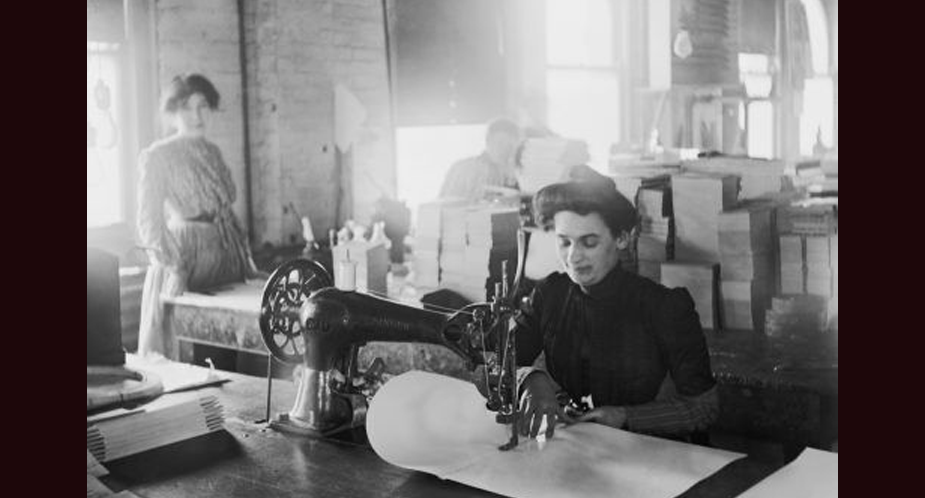
.. that were dangerous and unhealthy. The concept of “factory” was new in the United State, although there were versions well established in other countries. There was a learning curve yet to come. Young women left their farms and moved to the cities to work in the garment industry, but …
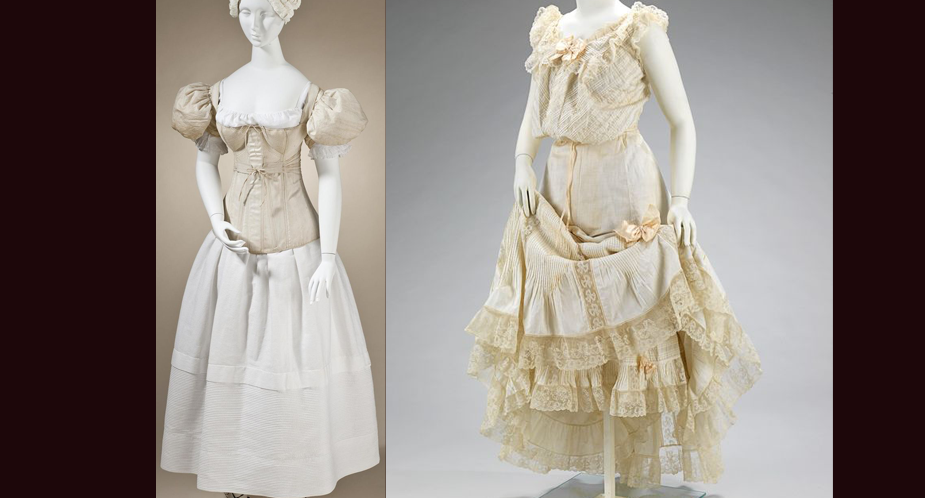
It was not only trim, but also the garments themselves that were made in mass. Mass production started out to mean people would take in a section of, say a blousewaist, in their homes. They would make hundreds of collars in their cottage, and then carry them to the factory …
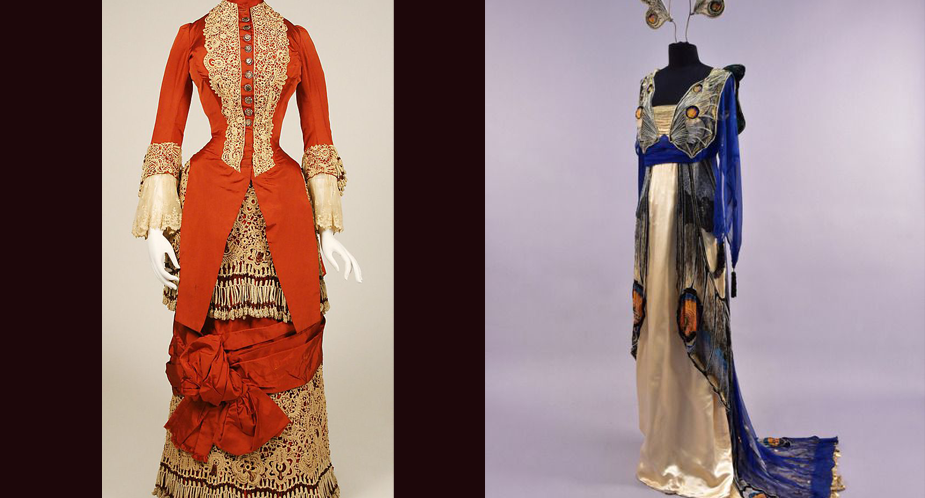
.. in 1882 (left) and 1910 (right), the “Haute Coutiere” and “Belle Epoque” high fashion designs out of Paris applied mass produced trims and fabrics liberally.
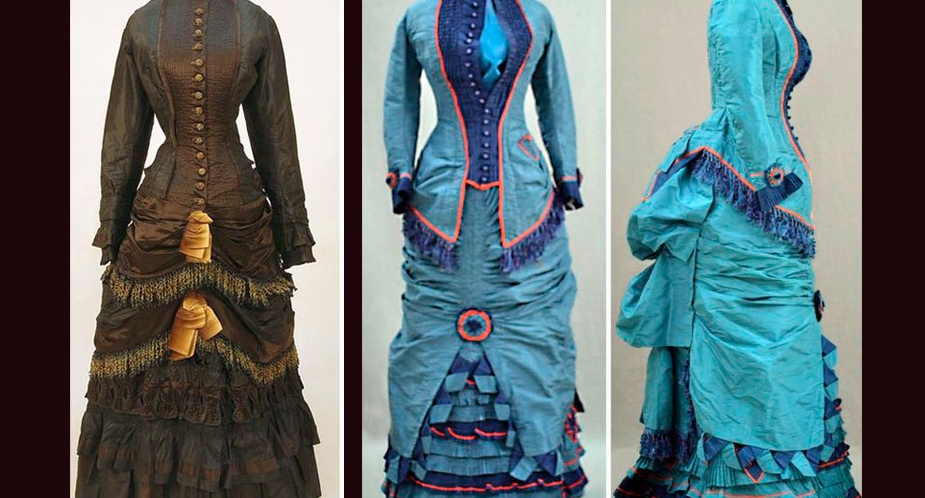
… The early 1880’s in particular are noted for trim on top of trim on top of trim.. and colors which seem conflicting to our modern eyes.. or not..? (photos: 1880 and 1882 ensembles)