
.. middle and upper classes. Victorian working class women would never reveal so much flesh. This meant the shawl had to become an essential feature of dresses. (Portrait by Lepoitteven: “Farm Girl at Toilette”)
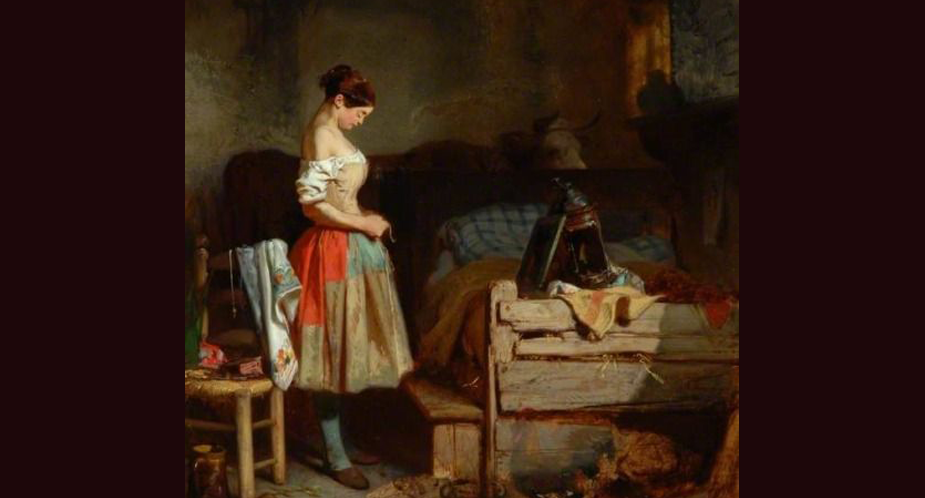
.. middle and upper classes. Victorian working class women would never reveal so much flesh. This meant the shawl had to become an essential feature of dresses. (Portrait by Lepoitteven: “Farm Girl at Toilette”)
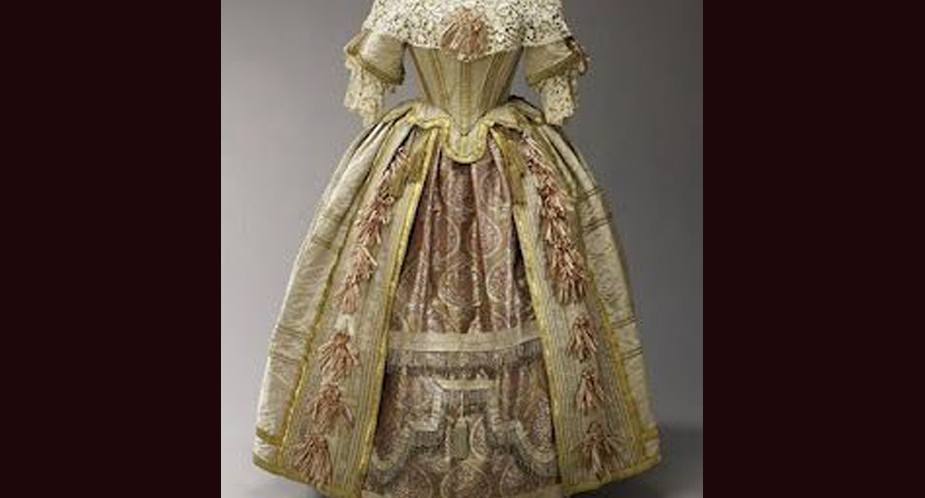
.. had to be in the current fashion. In Queen Victoria of England’s 1851 costume for Empress Eugenie’s “Stuart Ball”, she has the Bertha style (daringly low for Victoria) beautifully adorned with English lace. It has the 1850’s shape, waistline, shoulder line, and overall silhouette. Her nods to history are …
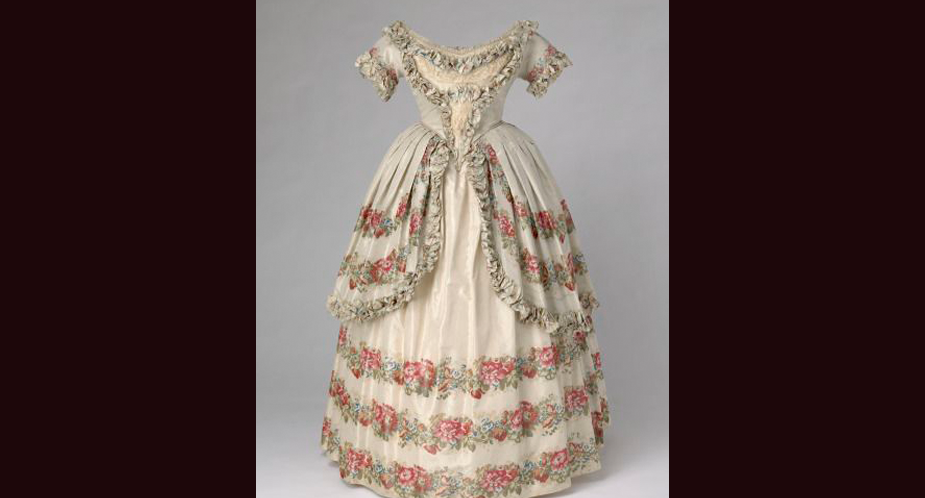
.. actually quite sedate and tailored for the time. She loved the Scottish plaids and English florals, and used them in rich fabrics woven by Englishmen. (One of Victoria’s 1851 evening gowns)
… to a whole new level of ornamentation. Empress Eugenie of France and Queen Victoria of England would ‘duke it out’ to be top of the fashion world as they were close friends and fashion fanatics. Eugenie had introduced the crinoline hoop to Victoria, courtesy of her Parisian designer Charles …
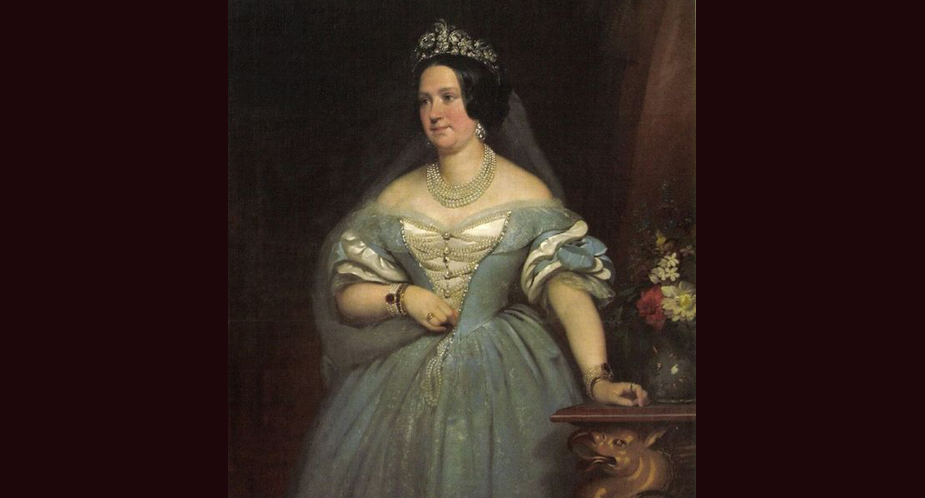
.. and complex sleeves. The neckline and sleeve combination gave a horizontal “winged” appearance which was meant to make the neck look slender and long and expose “creamy breasts” of the ideal woman. (Portrait estimated 1840, the wife of the Hungarian ambassador to England looks like she has a long …
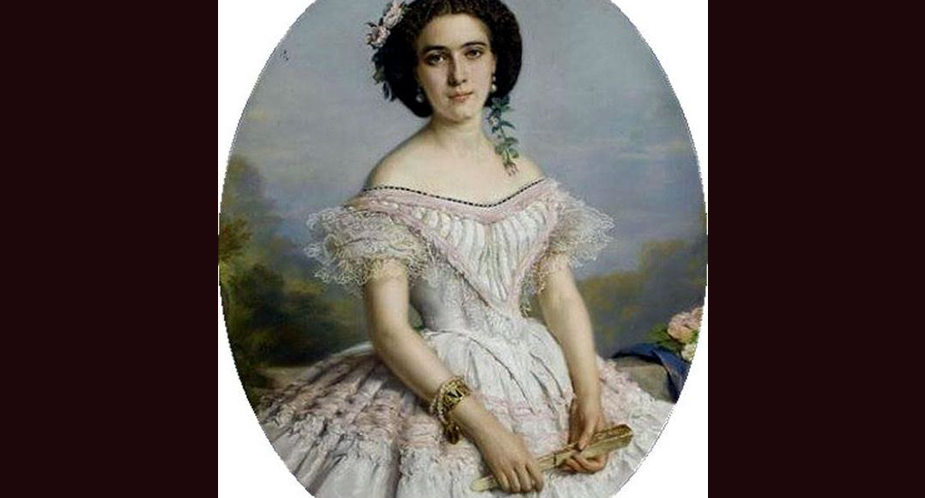
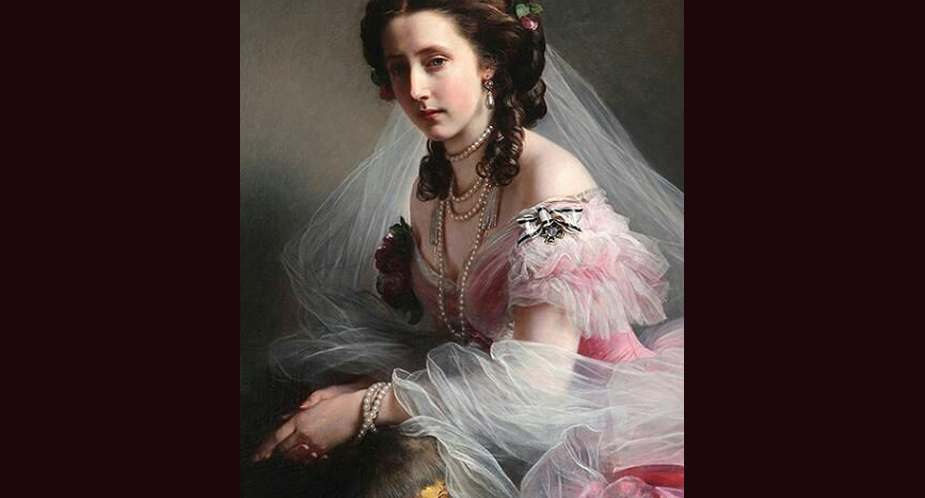
.. and applied the ornament to Court fashion. Evening wear was reserved for the wealthy and elite as this era had much conspicuous class disparity, particularly in Europe. (1851 Princess Charlotte of Belgium sports the newly introduced hoop, low ‘V’ waistline, and “Bertha” neckline with lovely vertical pleats and lots …
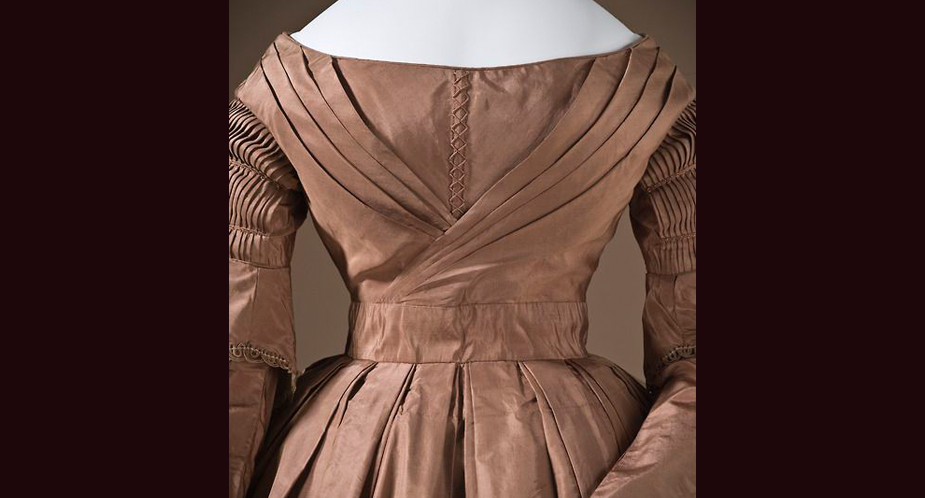
.. using pleats, tucks, flounces, and ruffles on the “Bertha” dropped neckline of the 1840’s and ’50’s. (1845 silk gown with innovative pleating on the “Bertha”)
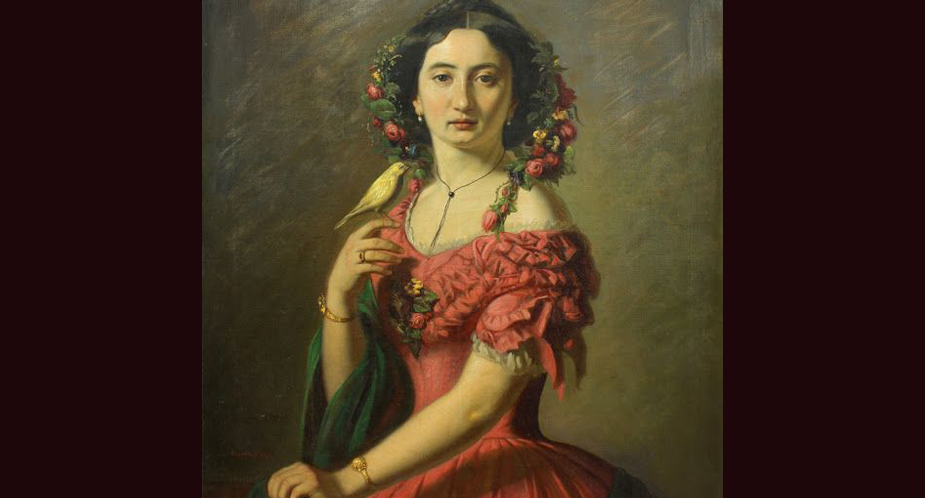
… neckline worn in the early Victorian era for evening wear. A “Bertha” totally exposed a woman’s shoulders, so they often trimmed it with 3-6″ of flounce or lace, or draped it with many horizontal bands of fabric pleats.
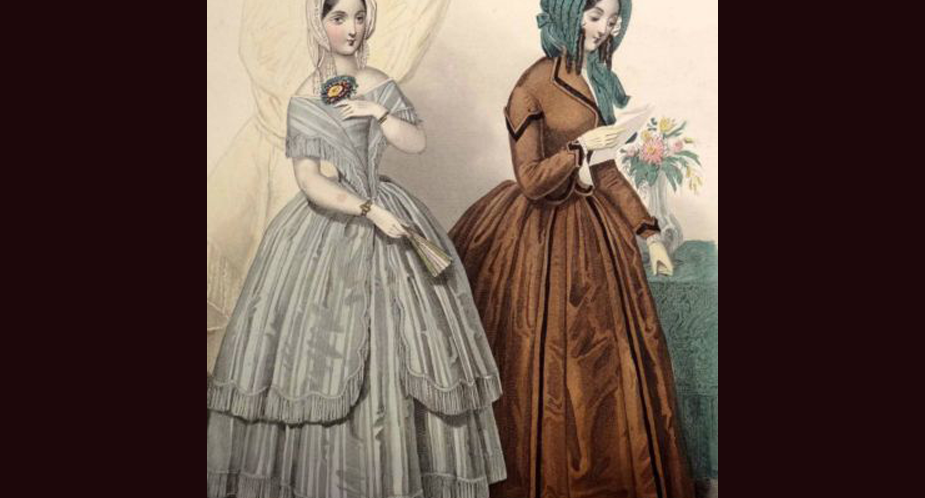
… very low. In the 1840’s-1860’s, women filled in the open neck for daily wear. (Fashion Plate from 1845: low neckline and exposed shoulders for evening vs. all covered up for day wear)
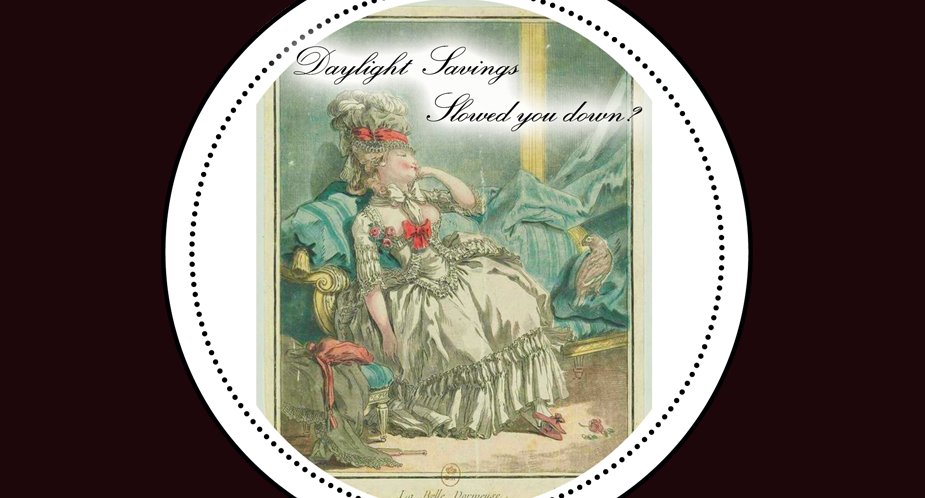
Perhaps you need a new outfit! Now taking commissions for ensembles 1740 to 1915. (1780: “La Belle Dormeuse” – Pretty Sleeper)